
Many people believe heart disease always begins with sudden, severe chest pain. In reality, the body often gives subtle warning signs weeks or even months before a serious heart problem develops. These symptoms can be easy to overlook because they may appear mild or come and go.
Recognizing the early warning signs of heart disease can help you seek medical care before the condition becomes more serious. Early diagnosis often leads to better treatment options and can reduce the risk of a heart attack or other complications.
At Srinidhi Heart and Child Clinics in Kukatpally, Hyderabad, we often meet patients who ignored symptoms such as unusual tiredness, mild chest discomfort, or shortness of breath, thinking they would disappear on their own. A simple heart check-up at the right time could have provided answers much earlier.
Let's look at ten warning signs you should never ignore.
1. Chest Pain or Discomfort
Chest pain is one of the most common signs of heart disease, but it doesn't always feel the way people expect. Some people experience a sharp pain, while others describe it as pressure, heaviness, squeezing, or a burning sensation in the center of the chest.
The discomfort may last for a few minutes or come and go. It can happen while walking, climbing stairs, or even during emotional stress.
Not every episode of chest pain is caused by a heart problem, but persistent or recurring chest discomfort should never be ignored. It could be a sign of reduced blood flow to the heart, also known as angina.
If chest pain is accompanied by sweating, nausea, pain spreading to the left arm or jaw, or difficulty breathing, seek emergency medical care immediately.
If you have repeated chest discomfort, scheduling a heart check-up in Kukatpally with an experienced cardiologist can help identify the underlying cause before it becomes serious.

2. Shortness of Breath During Daily Activities
Feeling slightly breathless after intense exercise is normal. However, becoming short of breath while walking short distances, climbing a single flight of stairs, or performing simple household activities may indicate that your heart is not pumping blood efficiently.
Many people blame age, lack of exercise, or tiredness for this symptom. In some cases, shortness of breath may be one of the earliest signs of heart disease, especially when it appears without a clear reason.
You may notice that everyday activities suddenly feel more difficult than they used to. Some people also experience breathlessness while lying flat or wake up feeling short of breath during the night.
If this symptom continues for several days or keeps getting worse, it is wise to consult a heart specialist in Hyderabad. A timely evaluation, including an ECG or other heart tests, can help detect problems before they become more severe.
Residents of Kukatpally, KPHB, Miyapur, and nearby areas should not ignore persistent breathlessness, particularly if it occurs along with chest discomfort or unusual fatigue.

3. Unusual Fatigue That Doesn't Improve with Rest
Everyone feels tired after a busy day, but heart-related fatigue is different. It can leave you feeling exhausted even after getting enough sleep or taking adequate rest.
Many patients describe it as feeling unusually drained while doing activities they previously managed without difficulty. Walking around the house, shopping, or carrying groceries may suddenly seem exhausting.
This happens because the heart may not be pumping enough oxygen-rich blood to meet the body's needs. As a result, your muscles and organs receive less oxygen, leading to persistent tiredness.
Unexplained fatigue is especially important if it appears along with chest discomfort, dizziness, or shortness of breath.
If you continue feeling unusually tired for several days without a clear reason, consider visiting a cardiology clinic in Hyderabad for a complete heart evaluation. Early assessment can help identify conditions such as coronary artery disease or heart failure before complications develop.

4. Irregular Heartbeat or Heart Palpitations
Have you ever felt your heart racing, skipping a beat, or fluttering in your chest? This is known as a heart palpitation. While it can happen after exercise, stress, or too much caffeine, frequent or unexplained palpitations should not be ignored.
Some people describe it as a pounding sensation, while others feel like their heart is beating too fast or out of rhythm. If these episodes happen often or are accompanied by chest pain, dizziness, or shortness of breath, they may indicate an underlying heart condition such as an irregular heartbeat (arrhythmia).
Heart rhythm problems can affect how efficiently your heart pumps blood. In some cases, they increase the risk of complications such as stroke or heart failure if left untreated.
If you notice repeated palpitations, don't wait for the symptoms to become more severe. A consultation with a cardiologist in Kukatpally can help identify the cause through tests such as an ECG, Holter monitoring, or other cardiac evaluations.
Early diagnosis often makes treatment simpler and more effective.

5. Pain in the Jaw, Neck, Shoulder, Back, or Left Arm
Many people think heart problems always cause pain in the chest. In reality, discomfort can spread to other parts of the body, especially the jaw, neck, shoulders, upper back, or left arm.
This pain may feel dull, heavy, tight, or aching rather than sharp. Some people experience the discomfort only during physical activity, while others notice it even at rest.
Women, older adults, and people with diabetes may experience these symptoms without significant chest pain. Because of this, they sometimes delay seeking medical care.
If pain in these areas appears along with sweating, nausea, breathlessness, or chest pressure, seek immediate medical attention.
If the discomfort keeps returning without a clear reason, it's wise to schedule a cardiac consultation in Hyderabad. A proper evaluation can help determine whether the pain is related to the heart or another medical condition.

6. Swelling in the Feet, Ankles, or Legs
Swollen feet or ankles are often blamed on standing for long hours or hot weather. While these can be common causes, persistent swelling may also indicate that the heart is not pumping blood efficiently.
When the heart becomes weaker, fluid can build up in the lower parts of the body. You may notice tight shoes, swollen ankles in the evening, or marks left behind after removing socks.
This symptom becomes more concerning if it appears along with shortness of breath, unusual tiredness, or rapid weight gain over a few days.
Ignoring persistent swelling may delay the diagnosis of heart failure or other cardiovascular conditions. A timely heart check-up in Kukatpally can help identify the underlying cause and guide appropriate treatment.

7. Dizziness, Lightheadedness, or Fainting
Feeling dizzy once in a while may not always point to a heart problem. However, repeated dizziness, feeling faint, or actually losing consciousness should never be ignored.
These symptoms may occur when the brain does not receive enough blood due to an underlying heart condition. Low blood pressure, irregular heart rhythms, or problems with blood flow can all contribute.
You might notice dizziness when standing up, walking, or even while sitting quietly. If this happens repeatedly or is accompanied by chest pain, breathlessness, or palpitations, seek medical advice as soon as possible.
An experienced heart specialist in Hyderabad can perform the necessary tests to identify the cause and recommend appropriate treatment.

When Should You See a Cardiologist?
Some heart conditions develop gradually, while others require immediate medical attention. It's always better to get symptoms checked early rather than waiting for them to become severe.
You should consult a cardiologist if you experience:
- Chest pain or pressure that keeps coming back
- Shortness of breath during routine activities
- Frequent heart palpitations
- Unexplained tiredness lasting several days
- Swelling in the feet or ankles
- Dizziness or fainting spells
- Pain spreading to the jaw, shoulder, neck, or left arm
- High blood pressure, diabetes, or high cholesterol along with any of these symptoms
People with a family history of heart disease should also consider regular heart screenings, even if they feel healthy.
If you live in Kukatpally, KPHB, Miyapur, Nizampet, Bachupally, Pragathi Nagar, or nearby areas, timely consultation with a cardiologist in Kukatpally can help detect heart problems before they become emergencies.
Prevention Tips for a Healthy Heart
While not every heart disease can be prevented, healthy lifestyle habits can lower your risk significantly.
Here are a few simple ways to protect your heart:
- Eat a balanced diet with plenty of fruits, vegetables, and whole grains.
- Limit foods high in salt, sugar, and unhealthy fats.
- Stay physically active for at least 30 minutes on most days.
- Maintain a healthy body weight.
- Avoid smoking and limit alcohol consumption.
- Keep blood pressure, cholesterol, and diabetes under control.
- Get enough sleep each night.
- Manage stress through relaxation, hobbies, or regular exercise.
- Schedule regular heart check-ups, especially if you are over 40 or have risk factors.
Even if you feel well, preventive heart screenings can identify problems before symptoms appear.
Frequently Asked Questions (FAQs)
1. What are the earliest warning signs of heart disease?
Early warning signs of heart disease may include chest discomfort, shortness of breath, unusual fatigue, irregular heartbeat, dizziness, swelling in the feet or ankles, and pain that spreads to the jaw, neck, shoulder, or left arm. If these symptoms keep returning, it's important to consult a cardiologist.
2. Can heart disease develop without chest pain?
Yes. Not everyone with heart disease experiences chest pain. Some people notice symptoms such as breathlessness, tiredness, palpitations, dizziness, or swelling in the legs. Women, older adults, and people with diabetes may have less typical symptoms.
3. When should I see a cardiologist?
You should see a cardiologist if you have recurring chest pain, frequent palpitations, unexplained shortness of breath, dizziness, or a family history of heart disease. Early evaluation can help detect heart problems before they become serious.
4. Who is at higher risk of heart disease?
People with high blood pressure, diabetes, high cholesterol, obesity, smoking habits, a sedentary lifestyle, or a family history of heart disease are at greater risk. Regular heart check-ups can help monitor these risk factors.
5. Can heart disease be prevented?
Many heart conditions can be prevented or delayed by maintaining a healthy lifestyle. Eating a balanced diet, staying physically active, avoiding tobacco, managing stress, controlling blood pressure and cholesterol, and having regular health check-ups all support better heart health.
6. How often should I have a heart check-up?
Adults over 40, or younger people with risk factors such as diabetes, high blood pressure, or a family history of heart disease, should discuss regular heart screenings with their doctor. The frequency depends on your overall health and medical history.
7. Where can I get a heart check-up in Kukatpally?
If you are experiencing symptoms such as chest discomfort, breathlessness, palpitations, or unexplained fatigue, you can consult Dr. Sravan Kumar Vemulapalli at Srinidhi Heart and Child Clinics, Kukatpally, Hyderabad, for a detailed cardiac evaluation and personalized care.
Conclusion
Your heart often gives small warning signs before a serious problem develops. Paying attention to symptoms such as chest discomfort, shortness of breath, unusual fatigue, swelling, dizziness, or irregular heartbeats can make a real difference.
Seeking medical advice early may help prevent complications and give you more treatment options. Don't ignore symptoms simply because they seem mild or come and go.
If you or a loved one has noticed any of the early warning signs of heart disease, consider scheduling a heart evaluation without delay.
At Srinidhi Heart and Child Clinics, Dr. Sravan Kumar Vemulapalli provides personalized cardiac care for patients in Kukatpally, Hyderabad, and nearby areas including KPHB, Miyapur, Nizampet, Bachupally, and Pragathi Nagar. Early diagnosis and the right guidance can go a long way in protecting your heart health.
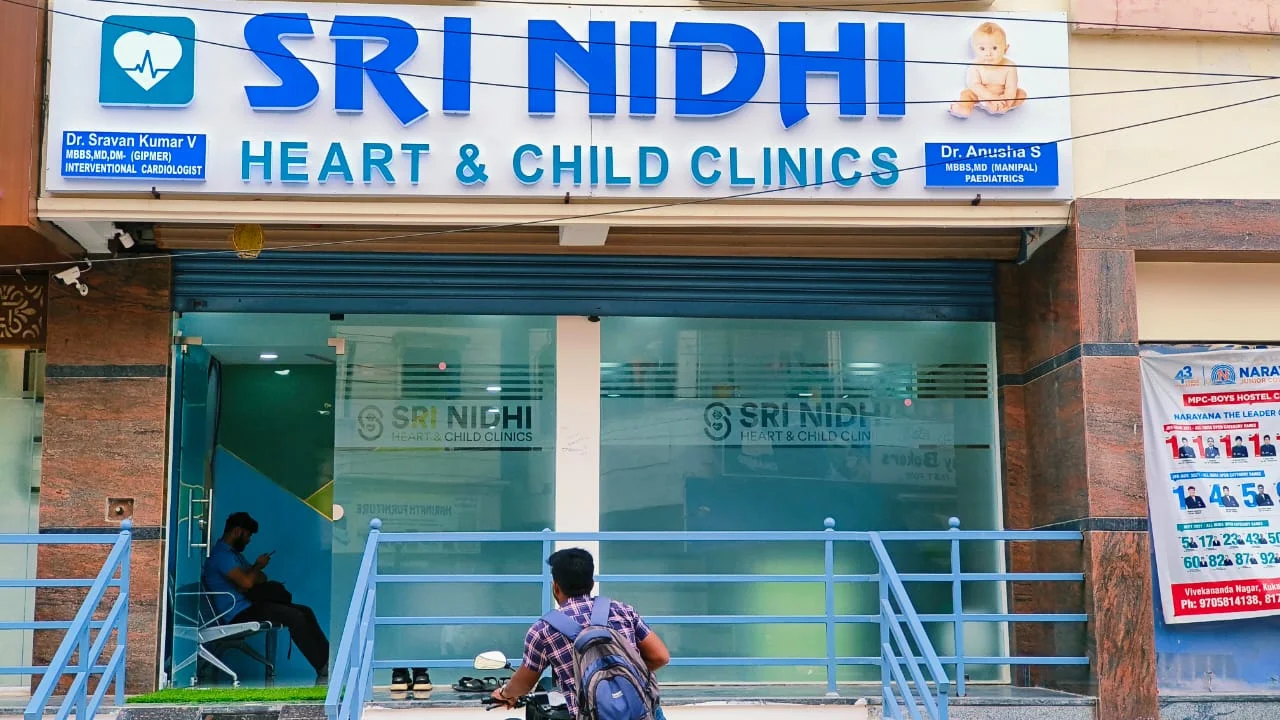
Visit Srinidhi Heart and Child Clinics
If you're experiencing symptoms discussed in this article or simply want to assess your heart health, our team is here to help.
Srinidhi Heart and Child Clinics
Consultant Cardiologist:
Dr. Sravan Kumar Vemulapalli
Looking for preventive heart care or expert consultation? Explore our Heart Health Blog for more patient-friendly articles, or book an appointment through our Contact Us page to schedule a consultation with our cardiology team.